What to expect
What happens before, during and after a Bioport TriCombo injection.
This page explains what happens if you and your clinician decide to go ahead with Bioport TriCombo, a glucosamine and chondroitin injection into the knee that also contains hyaluronic acid as its lubricating component: what to agree beforehand, the appointment itself, and the days and months afterwards.

Step by step
What happens, from assessment to review.
Step 01
Assessment
A clinician assesses your knee, your history and any scans, and discusses whether TriCombo is worth considering for you.

Discussed with your clinician alongside your scans Step 02
Decision with the clinician
You and your clinician decide together whether to go ahead. Clinics set their own fees; the fee is confirmed in writing before treatment.

You and your clinician decide together Step 03
One injection
TriCombo is given as a single injection into the knee joint from a pre-filled syringe, using the technique and any image guidance your clinician chooses.
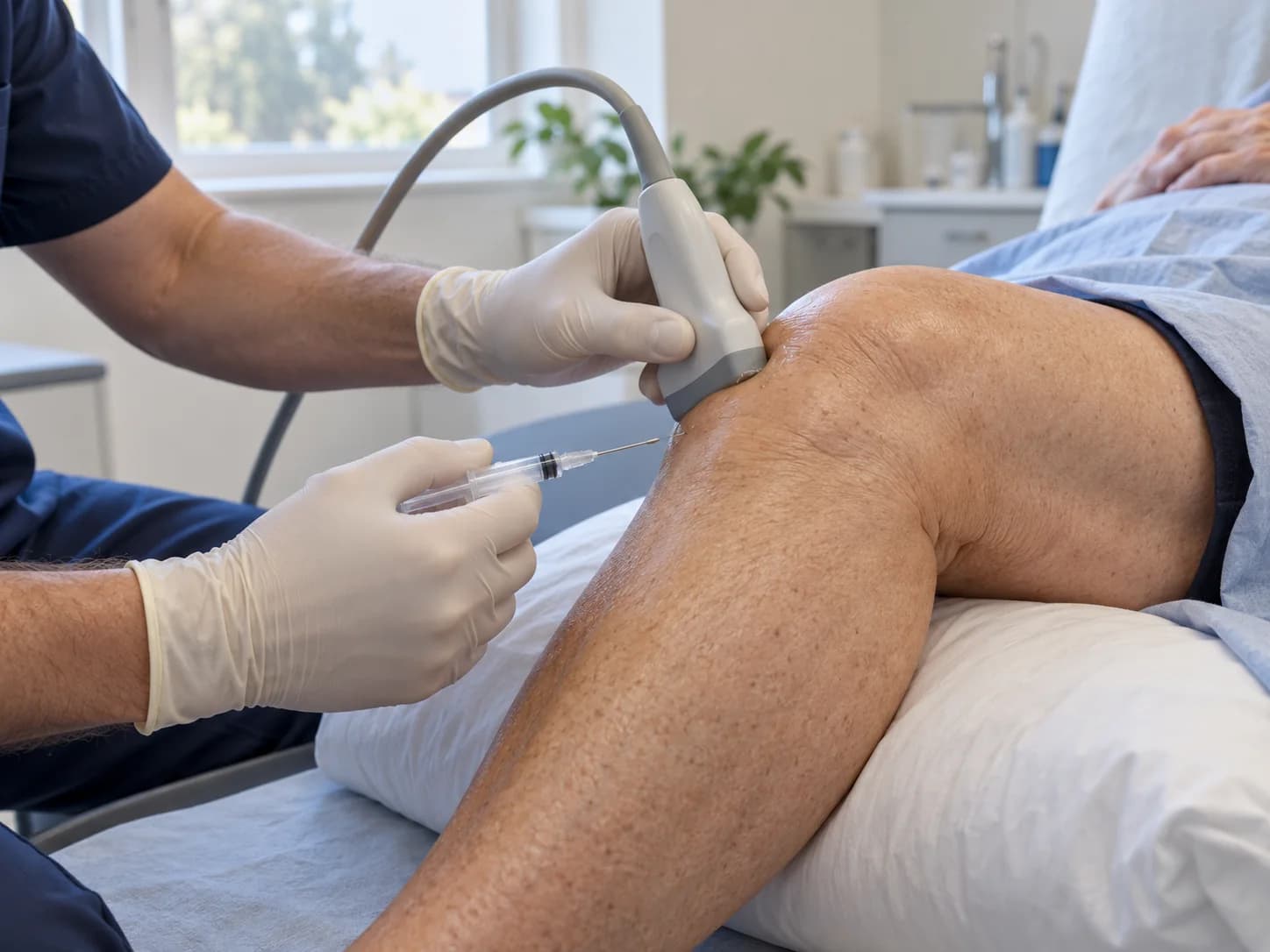
One injection into the knee joint, with any image guidance your clinician chooses Step 04
Recovery and review
Your clinician gives you aftercare advice and arranges a review. The manufacturer describes a six-month treatment interval; any repeat is a decision made at review.

Back to the activities you chose at assessment
Before treatment
What to agree with your clinician first.
Before the injection, you and your clinician should have agreed the following. If anything is unclear, ask before the day.
Which knee is being treated, and why the clinician thinks TriCombo fits.
How the injection will be given, including whether ultrasound or other image guidance will be used.
The aftercare advice you will be given, in writing, to take home.
When and how your knee will be reviewed afterwards.
The fee, and what it covers. Clinics set their own fees, and the clinic should confirm the fee in writing before treatment.
During the appointment
One injection into the knee joint.
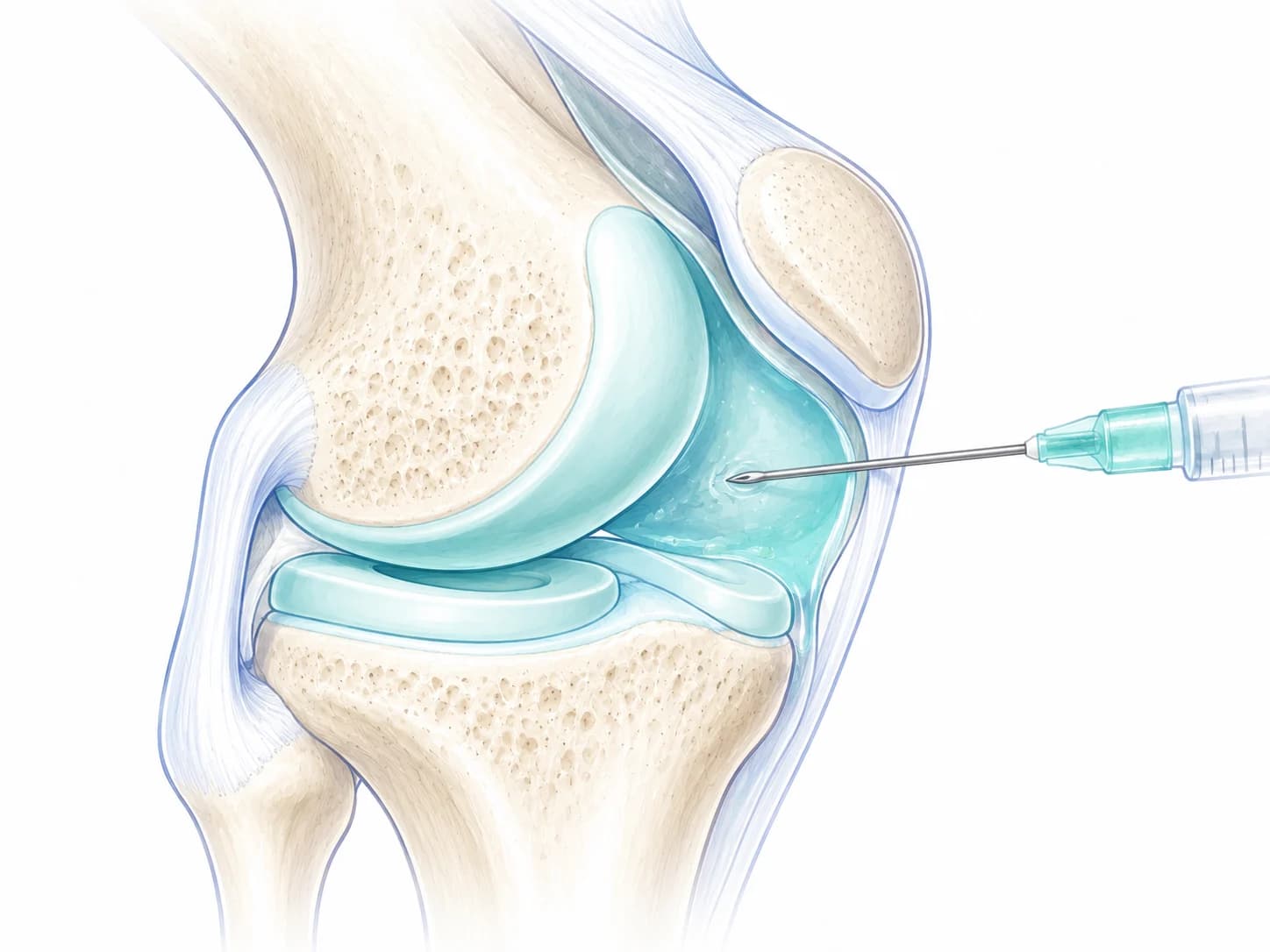
TriCombo is given by a clinician using sterile technique. It is an intra-articular injection, which means it goes into the space inside the knee joint, from a single pre-filled syringe.1
Whether a local anaesthetic is used, and whether the needle is guided by ultrasound or another form of imaging, are clinical decisions your clinician makes and explains to you. Ask how they plan to do it.

The first few days
Follow the written advice you are given.
Your clinician will tell you how to look after your knee in the first few days, including how active to be, and when you can drive and exercise. Follow that advice rather than general guidance from elsewhere, because it is set for your knee.
Some temporary discomfort or swelling after a joint injection is not unusual.
When to seek urgent assessment
The weeks afterwards
Building activity around the goals you agreed.
An injection is usually one part of a plan for knee osteoarthritis, not the whole of it. Your clinician may suggest exercise, physiotherapy or other steps alongside it.
Build activity back gradually, towards the goals you discussed at your assessment, such as a longer walk or getting back to a hobby. Keep a note of how your knee feels, so you can describe it accurately at review.


Follow-up
Review, and the manufacturer’s six-month schedule.
One syringe per treatment. The manufacturer recommends two treatment cycles per year, at six-month intervals.1
That is a schedule, not a promise of how long any benefit will last. At review, you and your clinician look at how your knee has responded and decide together whether a further injection, something different, or nothing more is the right next step.

Risks
What the manufacturer says about risk.
Any joint injection can cause temporary discomfort or swelling. The manufacturer states that the absence of chemical or irradiation cross-linking is intended to reduce the chance of reactions after injection, including pain at the injection site, local skin reactions and joint swelling. A knee that becomes hot, very swollen or very painful after an injection, particularly with fever, needs urgent medical assessment. Contraindications and warnings are in the instructions for use, which your clinician follows.1,2
Sources for this page
- 1.Nikovari Bio Tech Oy. Bioport TriCombo product brochure. Manufacturer document, 8 pages, 2025. View source
- 2.Nikovari Bio Tech Oy. Bioport TriCombo instructions for use. Supplied with each pack, 2025. View source
Ready to talk to a clinic?
See where TriCombo is offered, or read the answers to common questions first.